
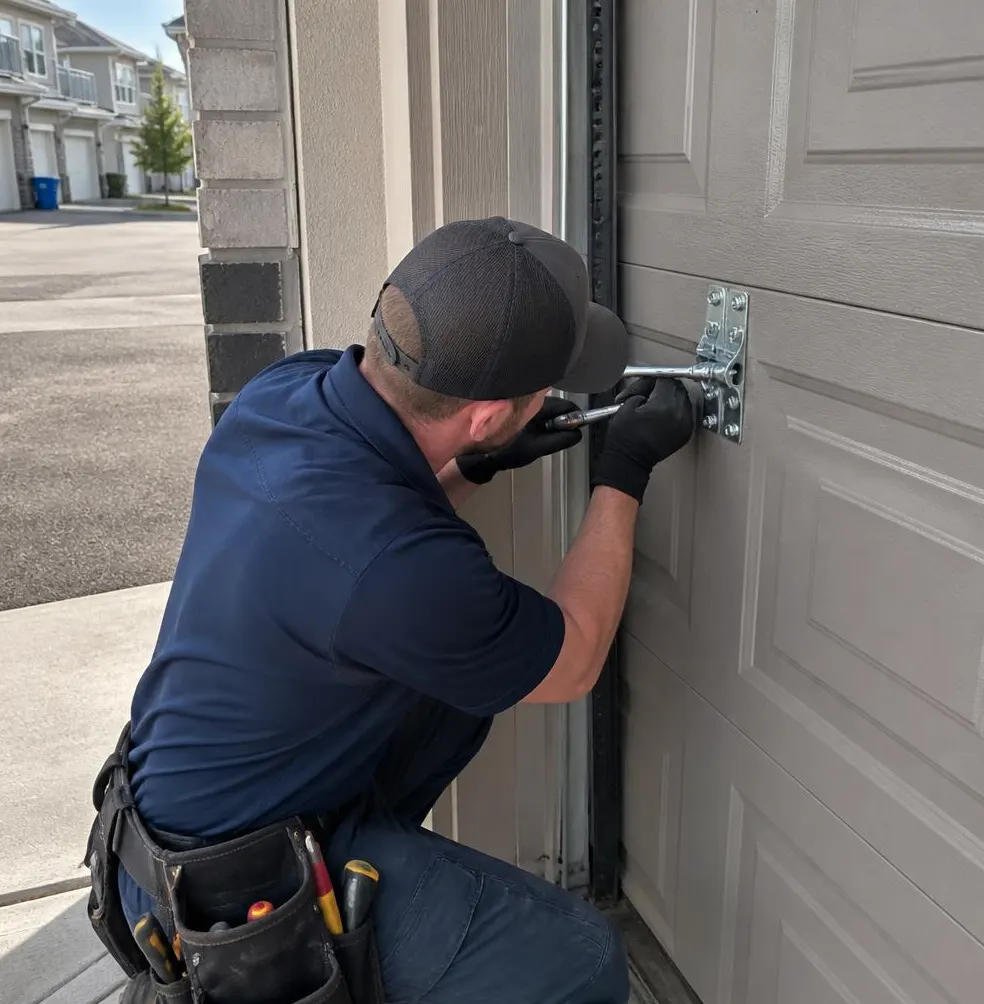
The Spot You Noticed Pulling Into the Garage
You pull in, grab the groceries, and there it is — that bubbled patch of paint near the bottom corner of the garage door, or a rust freckle spreading along the bottom panel. One of you says it's nothing, just surface stuff, paint it over in the spring. The other says the door is rotting from the ground up. You've had this argument before. Here's the actual answer, no guessing required.
Rust and Swelling Aren't the Same Problem
Steel doors and wood doors fail in different ways, and knowing which one you've got changes what that bubbling spot actually means.
Steel Doors
Most steel garage doors have a galvanized or painted coating that keeps moisture off the metal underneath. Once that coating is scratched, chipped, or worn thin — which happens from years of road salt spray, driveway chemicals, and general use — water gets underneath it. The paint bubbles because rust is forming under the surface and pushing it up. That's not cosmetic. It's active corrosion, and it will keep spreading outward from that spot until the metal underneath is compromised.
Wood Doors
A lot of the older housing stock around here still has original wood garage doors, or steel doors with wood trim and panels. Wood doesn't rust, it swells. When the bottom few inches sit close to a driveway apron or soak up splashback from rain and melting snow, the wood fibers absorb water and expand. You'll see the door binding in its track, a panel that looks slightly warped, or paint cracking along the grain instead of bubbling in a circle like rust does. Left alone, swollen wood eventually stays swollen even after it dries out, and it starts to crumble at the edges.
Why This Shows Up More Here Than in Other Climates
This part of Pennsylvania is tough on garage doors in a specific way. Humid summers keep moisture sitting against the door longer than it would in a dry climate. Then winter brings snow, ice, and repeated freeze-thaw cycles, plus the road salt that gets kicked up onto car undercarriages and tracked into the garage on tires. That salt residue holds moisture against the bottom of the door even on days when it isn't actively raining or snowing, which is exactly the kind of slow, repeated exposure that eats through a protective coating faster than age alone would. Add in the occasional nor'easter dumping wind-driven rain sideways against the garage, and you've got a door that's dealing with moisture from multiple directions, not just rain falling straight down.
How to Actually Check Which Problem You Have
You don't need special tools for this, just a flashlight and a few minutes.
- Press test: Push firmly on the spot with your thumb or the back of a screwdriver handle. If it feels soft, spongy, or gives way slightly, moisture has already gotten into the material. A hard, intact surface with just surface staining is a much smaller problem.
- Check both bottom corners: Moisture damage almost always starts at the bottom corners before the middle, because that's where water pools and salt residue collects longest. If one corner is affected and the door's flat everywhere else, you caught it early.
- Look at the weatherstripping: A cracked, flattened, or missing bottom seal lets water wick straight up into the door material instead of running off. Replacing a seal is a small fix; a door panel ruined because the seal failed is not.
- Check the slope of the garage floor or apron: If water pools right where the door meets the ground instead of draining away, the door is sitting in standing water every time it rains, which accelerates everything above.
- Look for flaking versus crumbling: Flaking paint with solid metal or wood underneath is a repaint job. Crumbling material, visible holes, or a section that's noticeably thinner than the rest means the damage has gone structural.
What to Actually Do About It
If it's caught early — a scratch through the coating, a small soft spot, cracked weatherstripping — the fix is straightforward: clean and dry the area, treat exposed metal with a rust-inhibiting primer before repainting, or let a wood section dry fully and reseal it. Replacing a bad bottom seal is cheap insurance and takes care of a lot of future problems on its own.
If the press test shows real softness, or you can see daylight through a corroded spot, patching won't hold. At that point you're looking at either a single panel replacement (steel doors are usually sectional, so one bad panel doesn't always mean a whole new door) or, if multiple panels or the bottom section's structural integrity is compromised, a full door replacement. Panel replacement costs noticeably less than a full new door, typically a few hundred dollars versus well over a thousand depending on the door, but it only makes sense if the rest of the door is in good shape and the panel is still available for that model.
When to Call Connellsville Garage Door
If you're not sure whether what you're looking at is a quick fix or the start of something bigger, that's exactly the kind of judgment call worth getting a second opinion on before winter locks everything into place. Connellsville Garage Door can come out, do a proper inspection, and tell you honestly whether you're looking at a seal replacement and some touch-up paint, a single panel swap, or a door that's earned its retirement. As part of garage door maintenance, they'll also check the hardware and track for salt and moisture damage you can't see from the outside, which matters just as much as the panels themselves.
If you're anywhere in Connellsville, Uniontown, Mount Pleasant, Scottdale, Dunbar, South Connellsville, Dawson, or Normalville and you've got a spot like this in your garage right now, give Connellsville Garage Door a call before the next freeze-thaw cycle makes the decision for you.